

Standing in a forty-degree rink at dawn is a silent pact between you and the sport. It is a place where comfort is earned and identity is forged through the biting cold. You know the struggle of balancing team pride with the physical reality of a freezing arena. Figuring out what to wear to a youth hockey game isn't about following a fashion trend; it is about building a tactical layering system that honors the grind. It is about showing up prepared for the early hours and the long-term sacrifices that define this subculture.
We will show you how to master rink-side style while staying warm enough to focus on every play. You will learn about the August 1, 2024, neck laceration protector mandate and the specific HECC requirements that keep your player safe on the ice. We also dive into the "suits" tradition for youth athletes and the essential apparel, like a Hockey is my life T-Shirt, that signals your obsession with the game. From thermal survival to professional game-day etiquette, this is your comprehensive checklist for the hockey life.
Key Takeaways
- Master the tactical layering system required to survive forty-degree community rinks without losing your edge.
- Discover exactly what to wear to a youth hockey game to balance professional team standards with the rugged reality of the bleachers.
- Decode the tradition of player dress codes, from the discipline of the pre-game suit to the utility of the modern team tracksuit.
- Elevate your rink-side presence by choosing apparel that transforms a casual interest into a life-defining commitment.
- Ensure full compliance with current safety mandates, including the essential HECC certifications and the 2024 neck laceration protector requirements.
Surviving the Frozen Cathedral: Understanding the Rink Environment
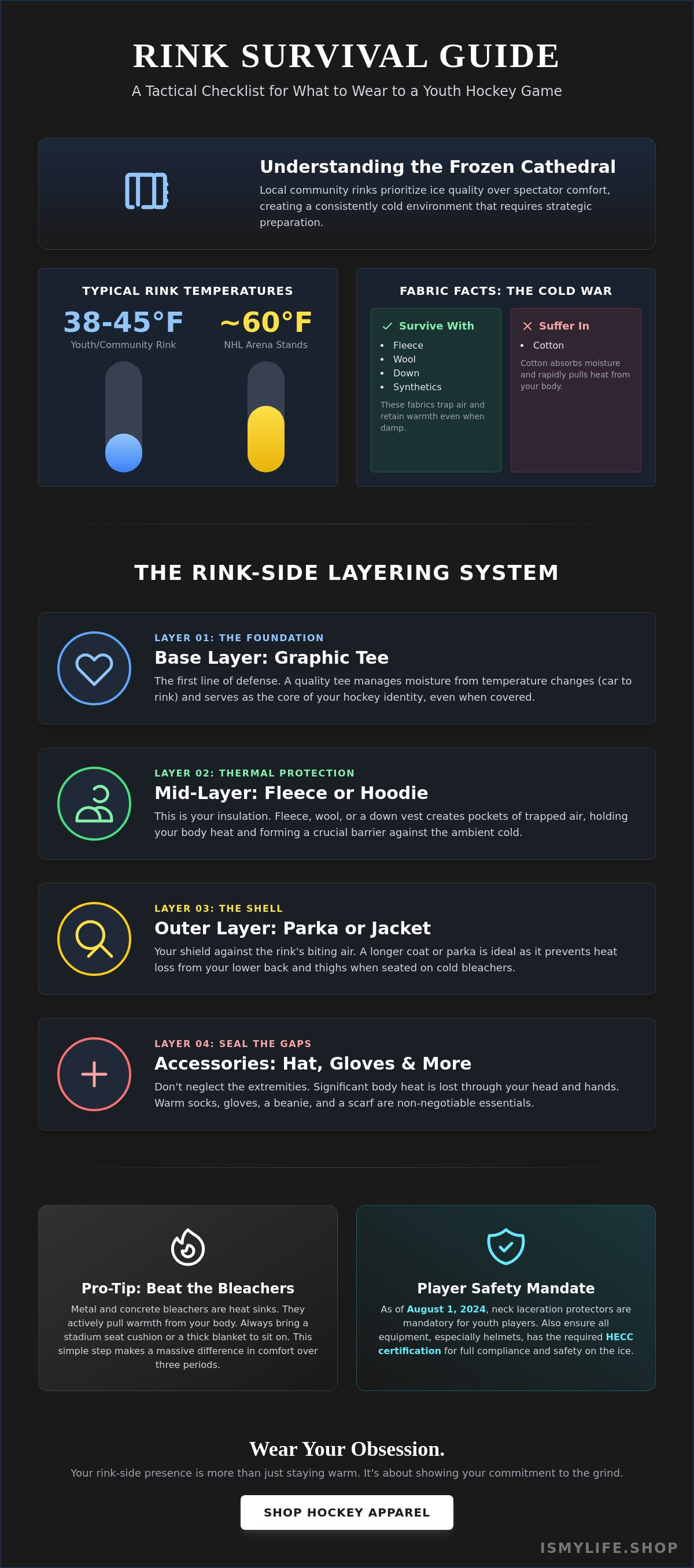
The community ice rink is a unique beast. Unlike professional arenas designed for spectator comfort, local rinks focus on one thing: maintaining the ice. This creates a "frozen cathedral" effect where the air is heavy, still, and biting. Surviving the Frozen Cathedral: Understanding the Rink Environment requires more than just a heavy coat; it demands an understanding of thermodynamics. While an NHL arena might hover around 60 degrees in the stands, your local community sheet often sits between 38 and 45 degrees. Knowing what to wear to a youth hockey game is the difference between an hour of misery and an hour of focused support.
The environment is deceptive. On the ice, players generate massive amounts of body heat through explosive movement. In the bleachers, you remain stationary. This lack of movement causes your core temperature to drop as the rink siphons your warmth. Choosing the right fabrics is the only way to combat this. Cotton is a liability because it traps moisture and stays cold. Wool, fleece, and down are your tools for survival. They trap air and create a barrier against the persistent chill of the arena.
Rink Physics 101 for New Parents
Ice refrigeration systems work by stripping heat from the floor. This process naturally cools the air directly above the surface, but in smaller facilities, that chill radiates directly into the bleacher area. Humidity plays a massive role here. Damp air pulls heat away from your body faster than dry air, making a 40-degree rink feel ten degrees colder. The "warm room" or lobby offers a temporary reprieve, but the real action happens on the metal benches. Metal is a conductor. It siphons warmth from your body the moment you sit down. Understanding these variables is the first step in mastering what to wear to a youth hockey game.
The Hockey Life Mindset
The cold is not an obstacle. It is a filter. It separates the casual observer from the truly dedicated. Embracing the 5:00 AM wake-up calls, the long drives, and the freezing temperatures is a badge of honor for the hockey family. Your clothing should reflect this internal discipline. This is where passion-driven apparel bridges the gap between function and identity. You aren't just a parent in the stands; you are a participant in a culture defined by persistence. Early mornings. Cold steel. Sharp blades. Heavy breaths. This is the grind. Transitioning from a casual fan to a dedicated hockey parent means dressing for the reality of the sport while signaling your unwavering commitment to the lifestyle.
The Ultimate Rink Side Layering Checklist for Spectators
Spectating is a stationary pursuit. While the players on the ice generate heat through explosive bursts of energy, you remain still in the stands. The cold is patient. It waits for gaps in your defense. Mastering what to wear to a youth hockey game requires a tactical approach to layering that prioritizes heat retention without sacrificing your identity. You are there to witness the grind, and your attire must be up to the challenge of a three-period battle against the ambient chill.
The system is simple but unforgiving. Base layers. Mid-layers. Outer shells. Accessories. Each piece serves a specific purpose in your thermal arsenal. If one fails, the cold finds a way in. Thermal survival is not about wearing the heaviest coat you own; it is about creating a micro-climate that moves with you from the heated lobby to the freezing bleachers.
Foundation: The Graphic Tee Base
Your journey begins with the layer closest to your skin. A high-quality cotton or performance blend tee is the foundation of your rink-side presence. It manages the moisture of your own body heat as you move, ensuring you don't become damp and chilled during the transition from the car to the arena. Even when buried under three layers of wool and down, wearing a Hockey is my life T-Shirt represents your dedication to the sport. The base layer is the most overlooked part of rink survival because it serves as the invisible engine of your entire thermal regulation system.
Thermal Protection and Outerwear
The mid-layer is where you trap the heat. Fleece, wool, and down are the standard-bearers for a reason. They create air pockets that hold your body temperature steady against the 40-degree environment. When choosing your outer shell, consider the length of the garment. A heavy parka is often superior to a standard puffer jacket because it covers the "thigh-gap" when you are seated. Metal and concrete bleachers are heat sinks; they will pull the warmth directly from your lower body if you aren't protected.
Accessories are the final line of defense. Leather gloves, wool socks, and a heavy beanie are mandatory. Wear Your Obsession: Why Hockey Apparel Defines the Lifestyle by embracing the rugged aesthetic of the sport. A thick toque isn't just a style choice for "hockey hair"; it is a functional tool to prevent the massive heat loss that occurs through your head in a damp arena. Don't forget a stadium seat or a heavy blanket. Providing a thermal break between yourself and the cold metal of the stands is a veteran move that signals you are prepared for the long haul.
Arriving in Style: The Youth Player Dress Code Debate
The walk from the parking lot to the locker room is the first period of the game. It is a transition from the civilian world to the arena. For the dedicated athlete, what to wear to a youth hockey game as a player is the first tactical decision of the day. This isn't about vanity. It is about a mental shift. Ironed shirts. Knotted ties. Polished shoes. These elements are not just clothing; they are an announcement of intent. They signal that the player is ready to embrace the grind and respect the history of the sport.
Coaches use dress codes to bridge the gap between individual talent and collective discipline. When a team arrives looking like a single, focused unit, the game has already begun in the minds of the opposition. Whether the requirement is a three-piece suit or a matching team tracksuit, the goal remains the same: eliminating distractions and fostering a culture of professional excellence. It is a ritual that prepares the mind for the physical battle ahead.
The Case for Formal Attire
Tradition runs deep in hockey. The suit and tie requirement mirrors the standards of the NHL, teaching young players that they are representatives of something larger than themselves. This level of formality is most common in high-level AAA play and major tournaments. It instills a sense of gravity. It demands discipline. Wearing a suit requires effort, and that effort translates to the ice. When every player commits to this standard, it builds a foundation of mutual respect and shared sacrifice that defines the elite hockey life.
The Casual Alternative: Team Gear
Practicality often dictates a shift toward athletic leisure. Modern team tracksuits offer the functionality required for pre-game warm-ups, allowing players to move through dynamic stretches without changing clothes twice. This shift reflects a broader movement in sports culture where comfort meets identity. Just as baseball is my life t-shirts have become a staple for ballplayers off the field, high-quality team gear allows hockey players to maintain their identity during long travel days.
The key is consistency. A team in matching warm-up gear still projects a unified front. It allows for game-day readiness while acknowledging the reality of long car rides and multiple games in a single weekend. When deciding what to wear to a youth hockey game, players must balance this need for mobility with the expectation of representing their club with pride. The clothing serves as the "switch" that turns on the competitive fire. Whether it is a blazer or a performance hoodie—and you can check out RNK Apparel Co. for premium rink-side options—the attire must reflect the obsession required to succeed in this sport.
Hockey Rink Outfit Ideas: Merging Comfort with Identity
The rink is a cultural space. It is a place where your presence signals your status as a veteran of the early mornings and the long-term sacrifices of the sport. Choosing what to wear to a youth hockey game is an act of defining your role within this community. You are not just a spectator. You are a pillar of support for the player on the ice. Your attire must reflect that weight. It should be a uniform of endurance that merges the physical necessity of warmth with the internal fire of your dedication.
Authenticity is found in the details. The 'Hockey Mom' classic—fleece-lined leggings, rugged winter boots, and a heavy down parka—is a testament to hours spent in the cold. The 'Dedicated Dad' aesthetic—a team-branded cap, a quilted utility vest, and heavy denim—projects a persona that is rugged and focused. These aren't just clothes. They are armor. They are a way to signal that you belong to the subculture of the grind. This sense of group unity often extends beyond the arena; for families planning post-season celebrations or team getaways, finding matching gear at Adorb Custom Tees is a great way to keep the bond strong outside the rink.
Staying Warm at Ice Rinks: 3 Go-To Outfits
Success at the rink requires a plan. These three archetypes provide a roadmap for your next game day:
- The Tactical Layerer: Start with a performance base. Add a heavy hoodie and a rugged utility vest. Finish with a wind-resistant shell. This allows you to shed layers if the lobby is warm and add them the moment you hit the glass.
- The Wool Warrior: Focus on natural fibers. A merino wool base layer paired with a heavy knit sweater and a thick wool scarf provides maximum heat retention. This is the choice for rinks known for their stagnant, bone-chilling air.
- The Team Superfan: Wear your obsession. Layer an oversized team jersey over a slim-profile down jacket. It provides the warmth of a parka while keeping your loyalty front and center.
For those who view the sport as a core part of their being, the identity outfit is the ultimate choice. Layer a thermal long-sleeve under a Hockey is my life T-Shirt to make your commitment visible even in the harshest environments. This isn't just a shirt; it is a manifesto of your devotion to the hockey life.
Essential Footwear for the Rink
Your connection to the cold begins at the floor. Concrete and metal rink floors act as heat sinks, creating a "cold-soak" effect that pulls warmth directly through thin soles. Sneakers are a tactical failure in this environment. Their thin rubber and mesh construction offer zero protection against the damp, freezing floor. You need boots with thick rubber lug soles to provide a thermal break between your feet and the ice-cooled concrete.
Master the "two-sock" rule to ensure your extremities survive the third period. Start with a thin moisture-wicking liner sock. Layer a heavy wool or thermal sock over it. This creates a pocket of trapped air that insulates your feet against the persistent chill. Persistence is the hallmark of the hockey family. Don't let a lack of preparation cut your game-day focus short. Dress for the grind. Stay for the win.
Wear Your Obsession: Why Hockey Apparel Defines the Lifestyle
Hockey is not a casual pastime. It is an obsession. When you decide what to wear to a youth hockey game, you are choosing a uniform that signals your place in this world. The cold is temporary, but the identity is permanent. Quality apparel acts as a manifesto. It tells the story of the early hours, the frozen toes, and the unwavering belief in the process. We wear this gear because it represents a shared struggle. It is a visual shorthand for dedication. Early mornings. Heavy breaths. Sharp turns. Hard shots. This is the rhythm of the life we chose.
The durability of a high-quality graphic tee mirrors the resilience required of the athlete. It withstands the wash cycles. It survives the travel days. It remains a staple of the wardrobe long after the final buzzer sounds. This is how a community of obsessed fans is built. We recognize each other by the gear we wear. We understand the sacrifice without saying a single word. Your clothing is the primary way you signal to the world that you are part of the subculture that respects the grind.
More Than a T-Shirt
A simple shirt summarizes thousands of hours of practice. It represents the sweat in the locker room and the focus on the bench. This identity transcends the ice. The same spirit of devotion is found in the soccer is my life community, where apparel serves as a badge of honor for the dedicated player. Whether you are at the rink or on the pitch, the gear you choose defines your commitment. The grind is a lifelong pursuit of excellence that transforms daily habits into a permanent identity reflected in your wardrobe.
Join the 'Is My Life' Movement
Your passion does not end when you leave the arena. True dedication means carrying that spirit into every aspect of your life. Finding gear that speaks to your specific athletic passion is the final step in mastering the lifestyle. You can transition your rink-side look to the street with ease. A well-worn hoodie or a classic tee works as well at a coffee shop as it does in the bleachers because the obsession never takes a day off. It is a consistent, disciplined heartbeat that defines who you are.
It is time to make your commitment official. Don't just watch the game; live it. Claim your identity at Is My Life Shop and wear your obsession with pride. Choose the gear that honors your sacrifice. Join the movement of those who understand that the sport is not just a game; it is everything.
Master the Arena Lifestyle
The final buzzer is just the beginning of the next cycle. You now have the tactical knowledge to survive the frozen cathedral and the insight to dress with purpose. Mastering what to wear to a youth hockey game is about more than just thermal regulation. It is about building a micro-climate of warmth through layers of wool, down, and high-quality base layers. It is about understanding that every garment you choose is a manifesto of your dedication to the sport. Your presence in the stands is a testament to the early hours, the long travel days, and the persistent grind that defines this life.
Your apparel should speak as loudly as your support. We provide identity-driven designs for the truly dedicated. Our high-quality fabrics are built for the athlete's lifestyle. With worldwide shipping for the global sports community, there is no reason to settle for generic gear. Show the World Hockey Is Your Life—Shop the Collection. Wear the gear that honors your sacrifice. Stay focused, stay warm, and stay dedicated to the game that defines you.
Frequently Asked Questions
Is it really that cold inside a youth hockey rink?
Yes, community rinks typically maintain temperatures between 38 and 45 degrees Fahrenheit to keep the ice surface stable. Unlike professional arenas with advanced climate control, local rinks allow this cold to radiate directly into the spectator areas. You remain stationary while the players generate heat through movement, making the environment feel significantly more punishing over a sixty-minute game. The dampness in the air often makes these temperatures feel even colder than the thermostat suggests.
Should my child wear a suit to their first hockey game?
You must check with the team coach first, as many youth organizations require a formal dress code for every game. While recreational teams are often casual, competitive AAA programs frequently mandate a suit and tie to instill discipline and team unity. Arriving in professional attire signals a mental shift from a casual participant to a dedicated athlete ready to embrace the grind. It is a ritual that respects the history of the sport.
What are the best hockey rink outfit ideas for moms?
The most effective outfit centers on a tactical layering system that prioritizes core warmth and identity. Start with a moisture-wicking base layer, add a heavy fleece mid-layer, and finish with an oversized down parka that extends past the waist. When considering what to wear to a youth hockey game, thermal-lined leggings and rugged, insulated boots provide the necessary protection for long hours spent on cold metal bleachers. Adding a team cap completes the look.
Can I just wear a winter coat, or do I need layers?
A single winter coat is rarely sufficient because it doesn't trap heat as effectively as a multi-layer system. Layers create pockets of air that act as insulation, preventing your body heat from escaping into the damp arena environment. Using a three-tier approach allows you to regulate your temperature as you move between the freezing rink-side and the heated lobby. This strategy ensures you stay focused on the game rather than the biting chill.
What kind of shoes should I wear to an ice rink?
You should wear insulated boots with thick rubber soles to create a thermal break from the freezing floor. Avoid sneakers or mesh-based shoes, as their thin construction allows the cold from the concrete to seep directly into your feet. Rubber lug soles also provide essential traction on floors that are frequently wet from melting ice. Keeping your feet dry and insulated is the first step in surviving a three-period battle against the cold.
How do I keep my feet from freezing while sitting in the bleachers?
Use the two-sock method and keep your feet off the direct floor whenever possible. Wear a thin liner sock underneath a heavy wool or thermal sock to maximize heat retention without cutting off circulation. Veteran parents often bring a small foam pad or a stadium seat to place under their feet. This prevents the "cold-soak" effect where the metal or concrete siphons warmth from your body throughout the game.
Is there a specific dress code for hockey parents?
There is no official dress code, but most parents adopt a uniform of team-branded apparel and rugged winter gear. Wearing team colors or a dedicated hockey tee signals your commitment to the subculture and your support for the grind. Understanding what to wear to a youth hockey game as a parent is about balancing this shared identity with the practical need for survival. It is about showing up prepared for the long-term sacrifices of the sport.
What should a youth hockey player wear under their equipment?
Players should wear moisture-wicking compression gear that covers their arms and legs to prevent chafing and manage sweat. This base layer acts as a second skin, keeping muscles warm during breaks in play. As of August 1, 2024, USA Hockey mandates that all youth players wear a BNQ or HECC-certified neck laceration protector. This safety equipment is a non-negotiable part of the modern player's uniform, ensuring they stay protected while they chase excellence on the ice.